
Play money
Play money
Euro-Playmoney Banknotes
606521013€3.99
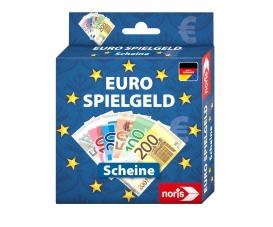
Euro Playmoney Banknotes bring euro-style cash into roleplay with a sufficient amount of notes for repeated shop scenes, simple purchases and early counting practice. In a play kitchen checkout, a toy market stand or a cashier game on the floor, the banknotes give buying and selling a clear sequence as notes are selected, handed over and sorted again. The set focuses on banknotes rather than coins, making note values the centre of the activity. Visible denominations include 5, 10, 20, 50, 100 and 200, so children can compare different values, group matching notes and begin to recognise how amounts change from one note to the next. Because the notes are clearly marked as play money, they fit educational roleplay without being confused with real cash. The 3+ age marking places the set in early learning use, where number recognition, sorting and first exchange routines can be practised through handling the notes directly. Whether used in a pretend shop, a home market stall or a classroom roleplay corner, the banknotes support educational play with familiar euro imagery. Made in Germany, the set adds a practical money theme to games that combine speaking, counting and everyday purchase situations.
Play money
Euro-Playmoney Coins
606521012€3.99
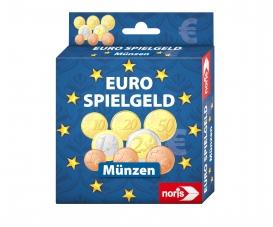
Euro Playmoney Coins bring familiar euro denominations into educational roleplay with coin shapes that can be sorted, counted and exchanged by hand. The set supports 3+ play with a clear money theme that fits naturally into pretend shopping scenes, small cashier setups and first number exercises around the table. Copper, gold and silver colours separate the different values visually, while the mix of cent and euro coins creates a simple way to compare amounts and recognise denominations. Coin faces show values such as 1, 2, 5, 10, 20 and 50, alongside 1 euro and 2 euro styles, so counting tasks can move from single pieces to small combinations. The lightweight plastic format suits repeated handling during sorting rounds, matching activities and basic payment play. Educational use can focus on recognising numbers, grouping equal values and understanding that different coins can belong to the same currency system. In a play shop, the coins can be laid out as change, collected in small piles or exchanged during buying and selling scenes. At a table, they also suit simple learning sessions built around counting, comparing and naming euro values, giving families and friends a concrete way to bring early money handling into play.